
That sharp heel pain with your first steps in the morning is often plantar fasciitis. It is very treatable with the right loading and, where needed, shockwave therapy.
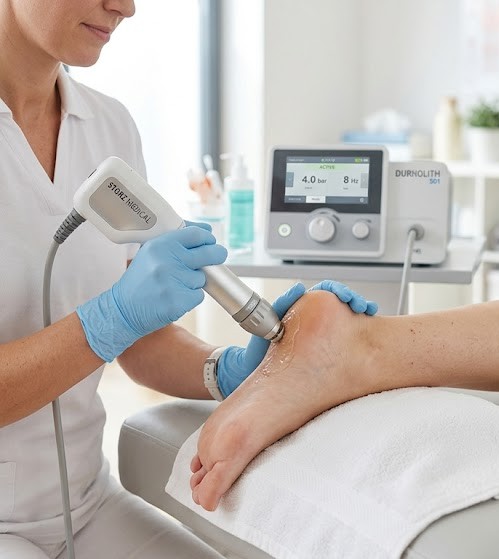
Plantar fasciitis is irritation of the thick band of tissue (the plantar fascia) that runs along the sole of the foot. It is the most common cause of heel pain.
The classic sign is sharp pain under the heel with your first few steps in the morning or after sitting, which often eases as you warm up.
Common symptoms:
We confirm the diagnosis, address contributing factors such as calf tightness and footwear, and start a progressive loading programme for the fascia and calf, which is the most effective conservative treatment.
For longer-standing cases that have not responded, shockwave therapy is a well-evidenced option, and NICE supports its use for plantar fasciitis (IPG311).
Plantar fasciitis can be stubborn, but it responds well to a clear plan. Here is the path we follow from assessment to pain-free steps.
We confirm plantar fasciitis, rule out other causes of heel pain, and identify contributing factors such as calf tightness, footwear and a recent change in activity.
Early on we ease your symptoms with advice on supportive footwear, load management and simple strategies for that painful first step of the day.
The core of recovery is a progressive calf and foot loading programme, which is the most effective conservative treatment for plantar fasciitis.
We build you gradually back to walking, standing and running, and for stubborn cases we can add well-evidenced shockwave therapy alongside your loading plan.
Not sure whether physiotherapy is right for your heel pain? Book a free discovery call and we will talk through your symptoms and help you find out if we are the right fit, with no obligation.
Book a Free Discovery CallPlantar fasciitis is irritation of the plantar fascia, the thick band of tissue along the sole of the foot. It is the most common cause of heel pain.
It can be stubborn, often taking several months, but the large majority of cases resolve with consistent loading exercises and sensible load management.
Supportive footwear or insoles can ease symptoms for some people, and they work best alongside a progressive strengthening programme rather than on their own.
Rarely completely. We adjust your activity to a tolerable level and build it back up gradually as your symptoms settle.
Usually not. Heel spurs are common and are frequently found in people with no pain at all, so they are seldom the source of the problem.
Calf and plantar fascia stretching can help, and the effect is greatest when it is combined with progressive strengthening.
For plantar fasciitis that has not responded to loading and load management, shockwave therapy is a well-evidenced option that NICE supports (IPG311).
Book a thorough assessment in Uckfield and we’ll explain what’s going on and build a plan to get you moving again.
Book an Assessment