
Sciatica describes leg pain that follows the path of the sciatic nerve. It can be distressing, but most cases settle over time with the right approach.
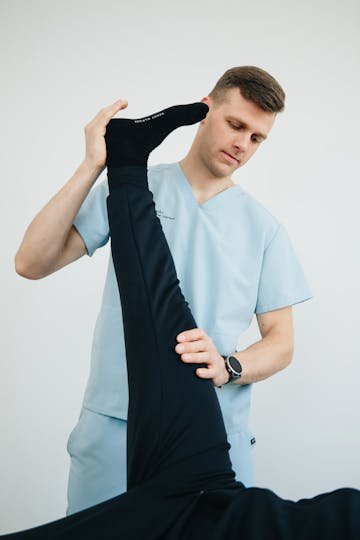
Sciatica is a symptom rather than a diagnosis. It usually results from irritation or compression of a nerve root in the lower back, often from a disc bulge, and produces pain, tingling or numbness that travels into the buttock and leg.
The reassuring news is that the large majority of cases improve without surgery, frequently within weeks to a few months.
Common symptoms:
We assess your back and nerve function, identify any signs that need onward referral, and reassure you about what is going on. Staying as active as your symptoms allow supports recovery.
Treatment includes graded movement and exercise to ease nerve sensitivity, hands-on therapy where useful, and clear guidance on pacing so you can keep progressing.
Most sciatica settles well without surgery. Here is the path we follow from your first assessment to calming the nerve and rebuilding your confidence.
We assess your back and nerve function to confirm sciatica, identify which nerve is irritated, and screen for the rare signs that need urgent referral.
Early on we find the positions and movements that ease your leg symptoms, give clear pain-management advice, and help you stay as active as your symptoms allow.
As the nerve settles we progress graded exercise to load the back and leg, reduce nerve sensitivity and rebuild your capacity for daily activity.
We help keep your back robust and give you a plan to manage any flare-up, so you stay confident that sciatica will not take over again.
Not sure whether physiotherapy is right for your sciatica? Book a free discovery call and we will talk through your symptoms and help you find out if we are the right fit, with no obligation.
Book a Free Discovery CallSciatica is a symptom rather than a diagnosis. It describes pain, tingling or numbness travelling down the leg from irritation or compression of a nerve root in the lower back, often from a disc bulge.
For most people, no. The large majority of cases settle without surgery, frequently within weeks to a few months. Surgery is considered only for persistent or severe symptoms.
Gentle activity within tolerable limits usually helps recovery more than resting, and we guide you on how to move safely.
Many cases improve within six to twelve weeks, though the timeframe varies from person to person.
Not routinely. The diagnosis is usually clinical, and an MRI is used mainly when symptoms are severe, persistent, or surgery is being considered.
Loss of bladder or bowel control, numbness around the saddle area, or worsening weakness in the leg need same-day assessment, as they can signal a rare but serious condition called cauda equina syndrome.
Yes. Exercise, education and hands-on treatment help settle symptoms, restore movement and reduce the chance of it returning.
Book a thorough assessment in Uckfield and we’ll explain what’s going on and build a plan to get you moving again.
Book an Assessment